
TENDER THINGS – conceptual & useful
Hand made, cuddled, caressed, loved
The cultural anthropologist Margaret Mead was once asked, “What is the earliest sign of civilization in any given culture?”
The man who asked the question expected her to answer, a clay pot or perhaps a fish hook or a grinding stone, but Mead answered, “a healed femur,” which is leg bone below the knee. She explained that no healed femurs are found where the law of the jungle governs – which is “the survival of the fittest.”
“The first sign of civilization in a culture was a femur (thighbone) that had been broken and than healed. In the animal kingdom, if you break your leg, you die. You cannot run from danger, get to the river for a drink or hunt for food. You are meat for prowling beasts. No animal survives for broken leg long enough for the bone to heal.
A broken femur that has healed is evidence that someone has taken time to stay with the one who fell, has bound up the wound, has carried the person to safety and has tended the person though recovery. A healed femur shows that someone took care of the injured person, doing hunting and gathering for that person until the leg healed.
Helping someone else through difficulty is where civilization starts. The evidence of compassion, she said, is the first sign of civilization.”
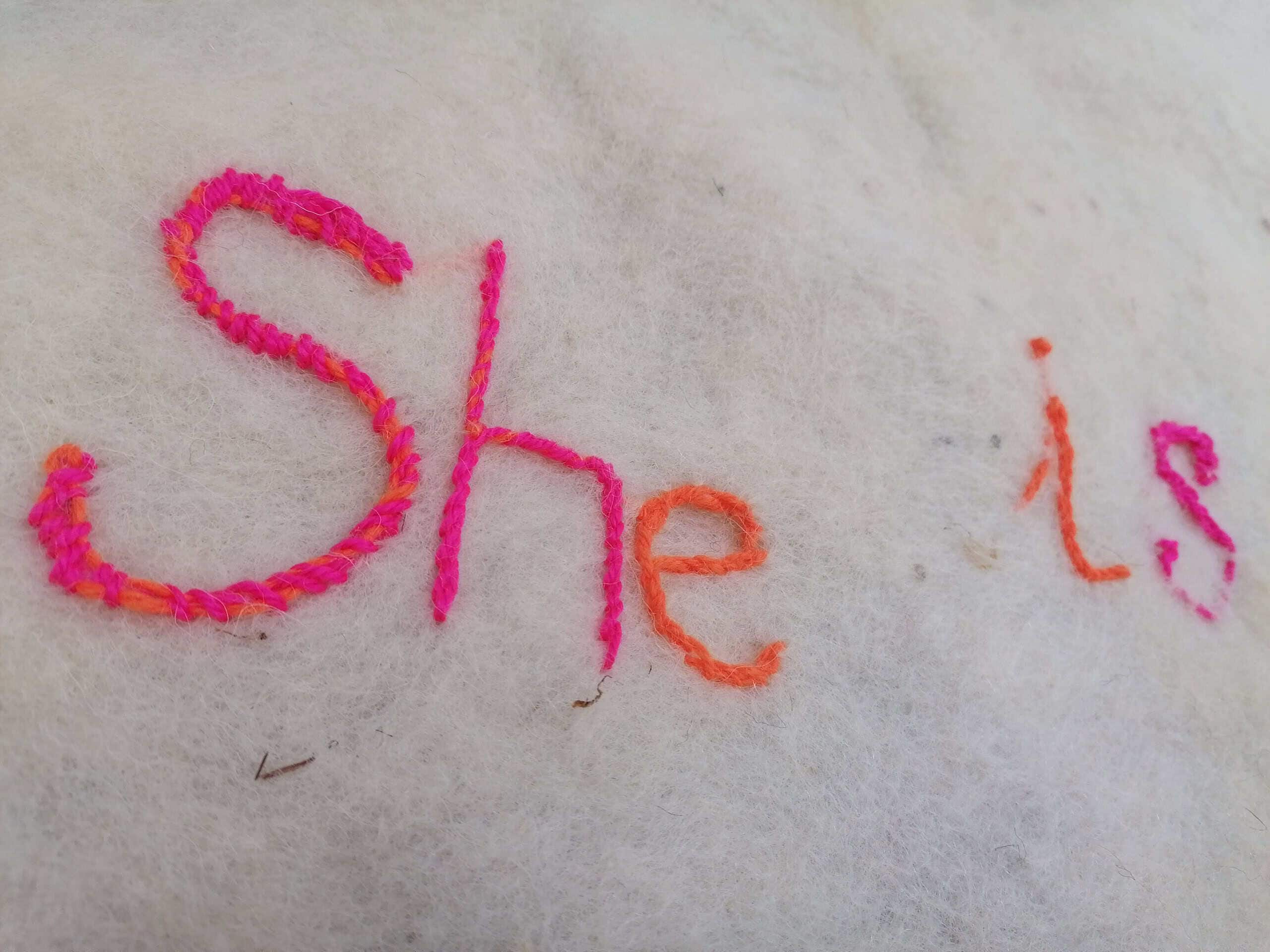
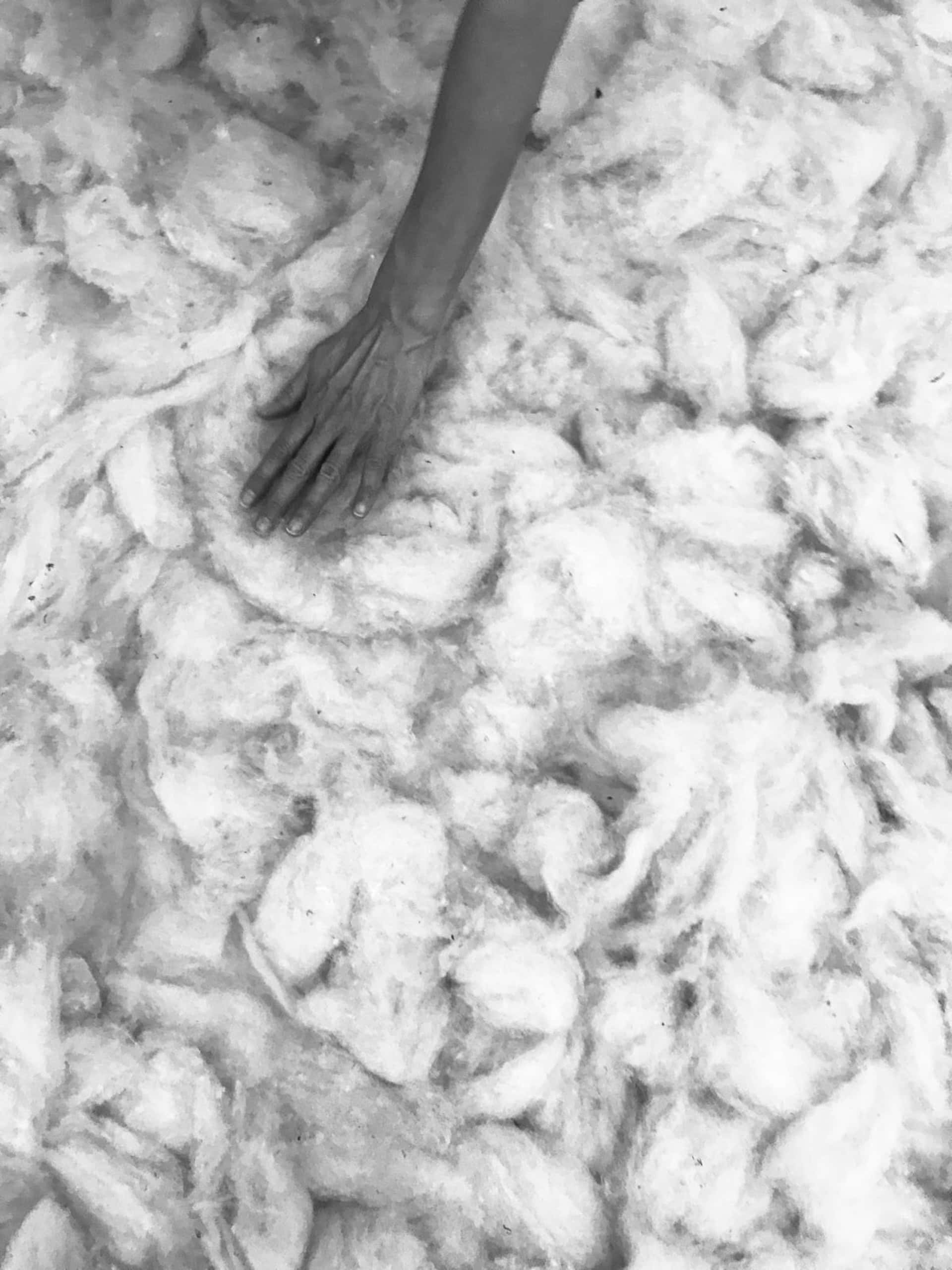
The works series Tender Things is about the spinning of stories – a process that is stimulated by the material itself (organic wool), within which and through which the story materialises. The constellation of visual and textual images made directly in the material by the process of hand felting, incorporates political and intimate texts of several important philosophers of the 20th century that refer to the phenomena of great shifts – ups and downs that are levelled today by the major crisis in all aspects of life. In stark contrast to the massive and rapid changes, and in opposition to the present day overproduction of material objects, over-accumulation of sensations, consumption of attention and exposure to serial distractions, Tender Things introduces a different mode of production; the process is significantly slowed down, and involves total dedication motivated solely by artistic decisions. The process of making includes body choreography of different intensities – from the energetic action of rolling large-format wool, which was the job traditionally performed by men, to incorporating colours and letters into the material through rubbing, caressing, stroking and touching. Touch is one of the main “tools” of the canvas-painting-blanket construction. Tactility is one of the most powerful instruments, transferring energy and feelings present in the creative process in the most convincing way.
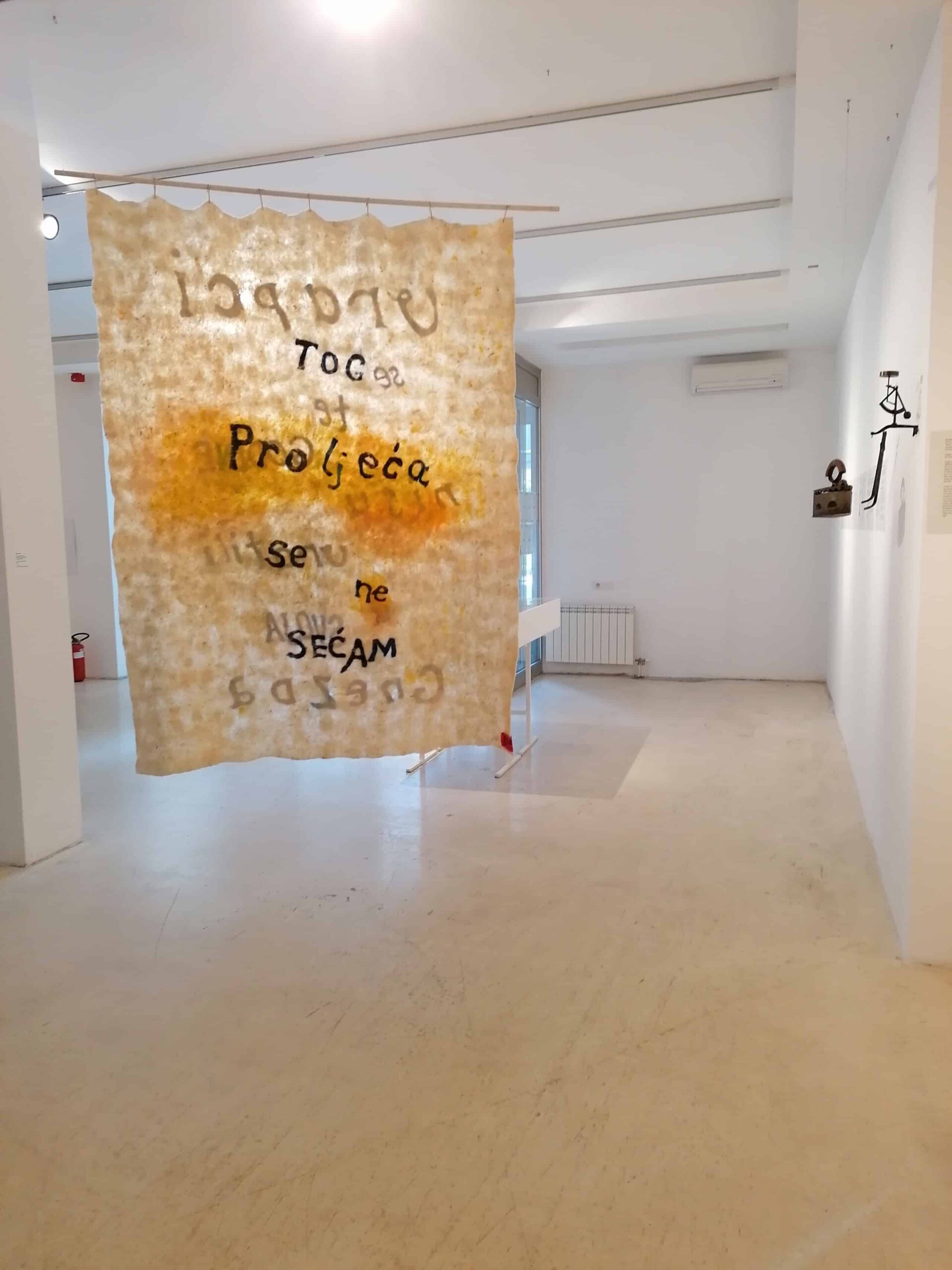
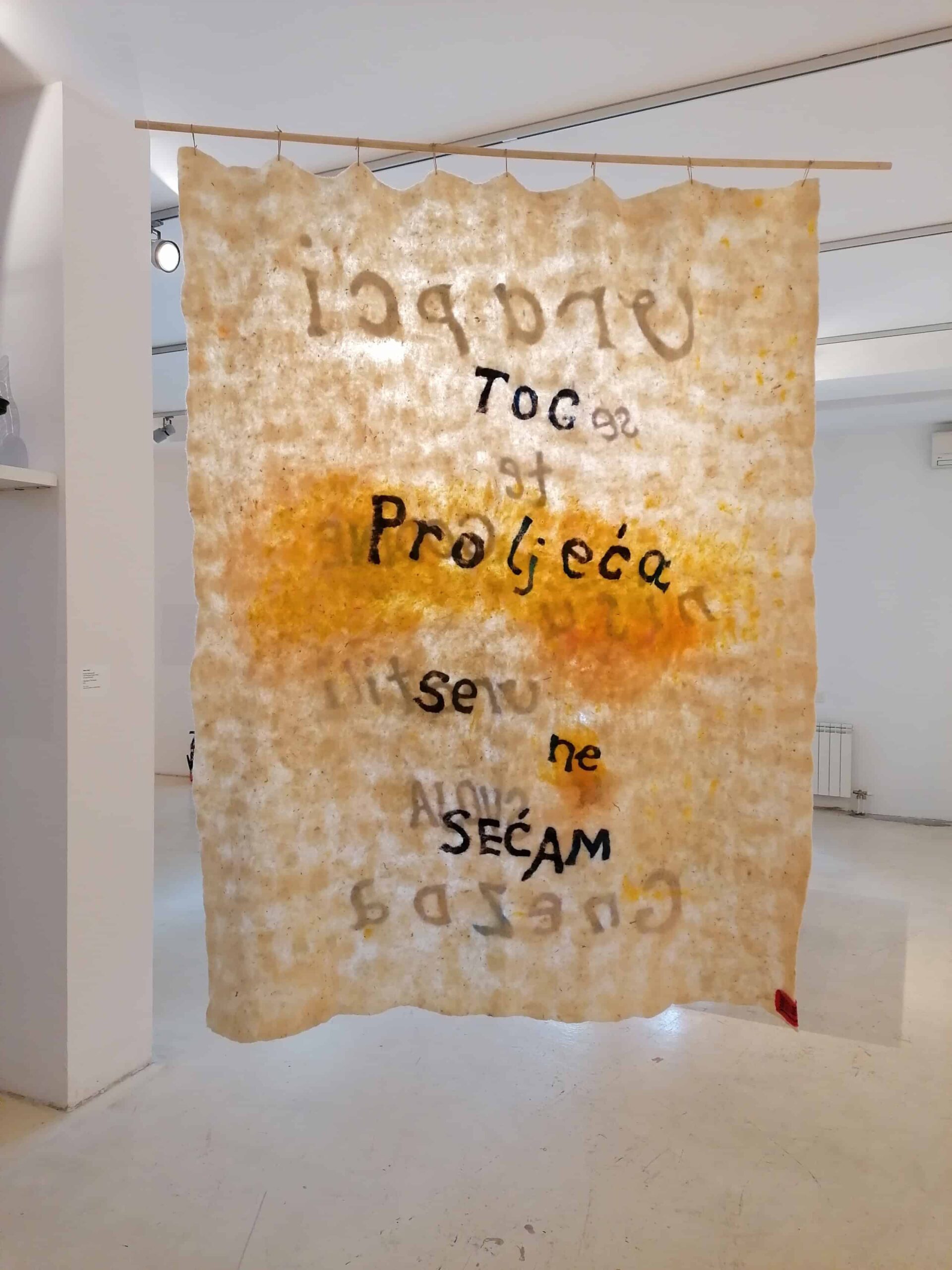
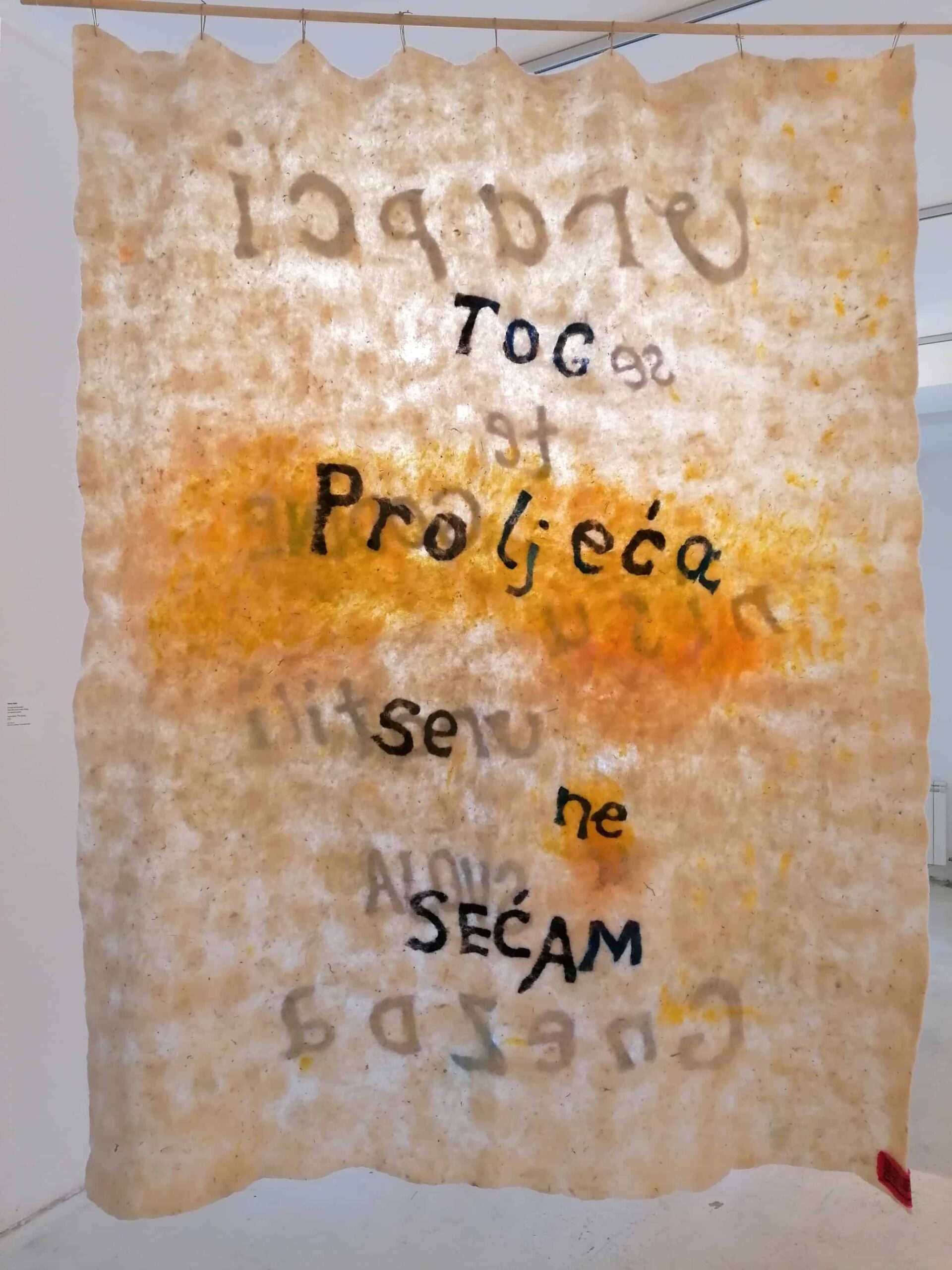
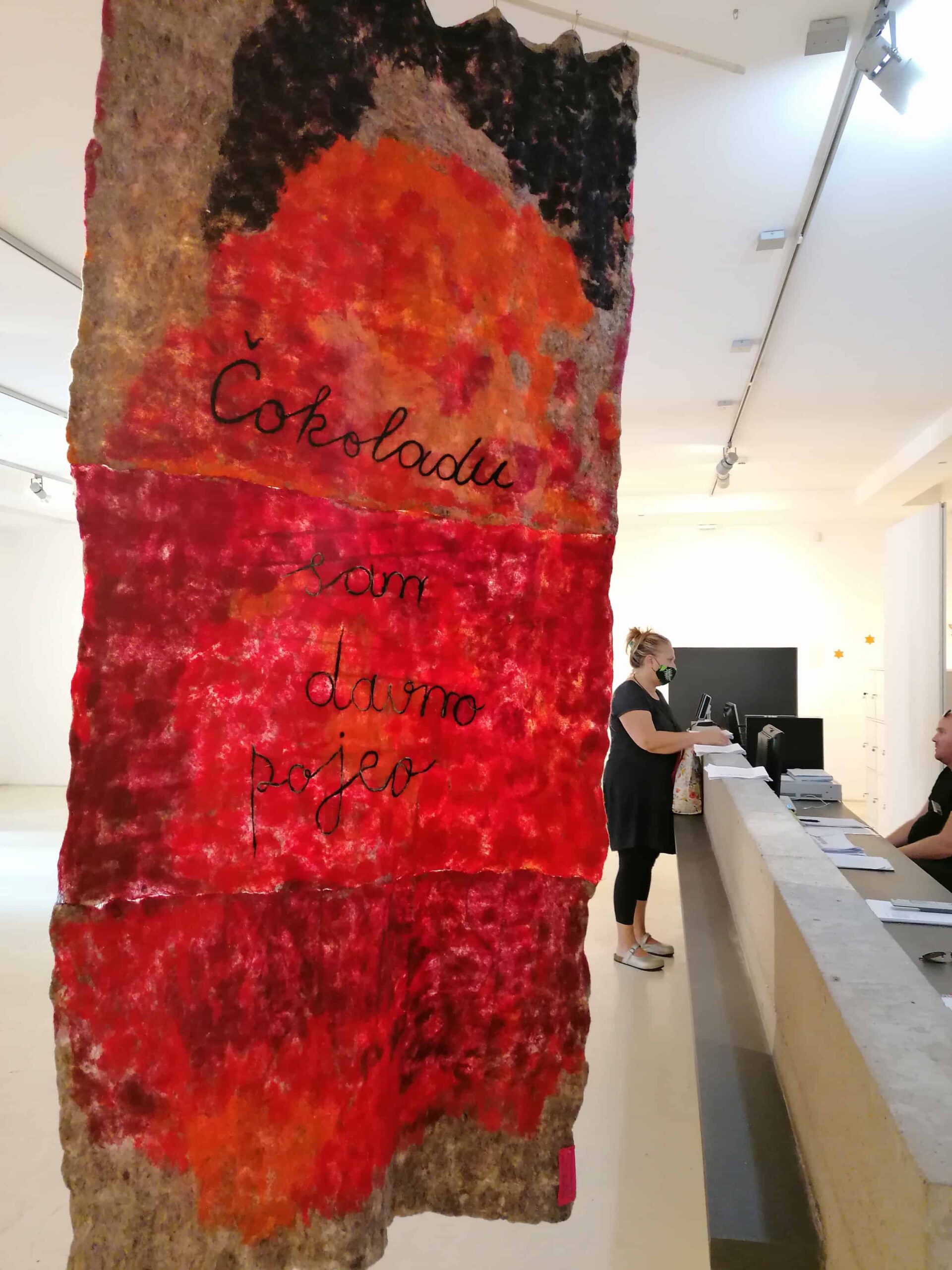
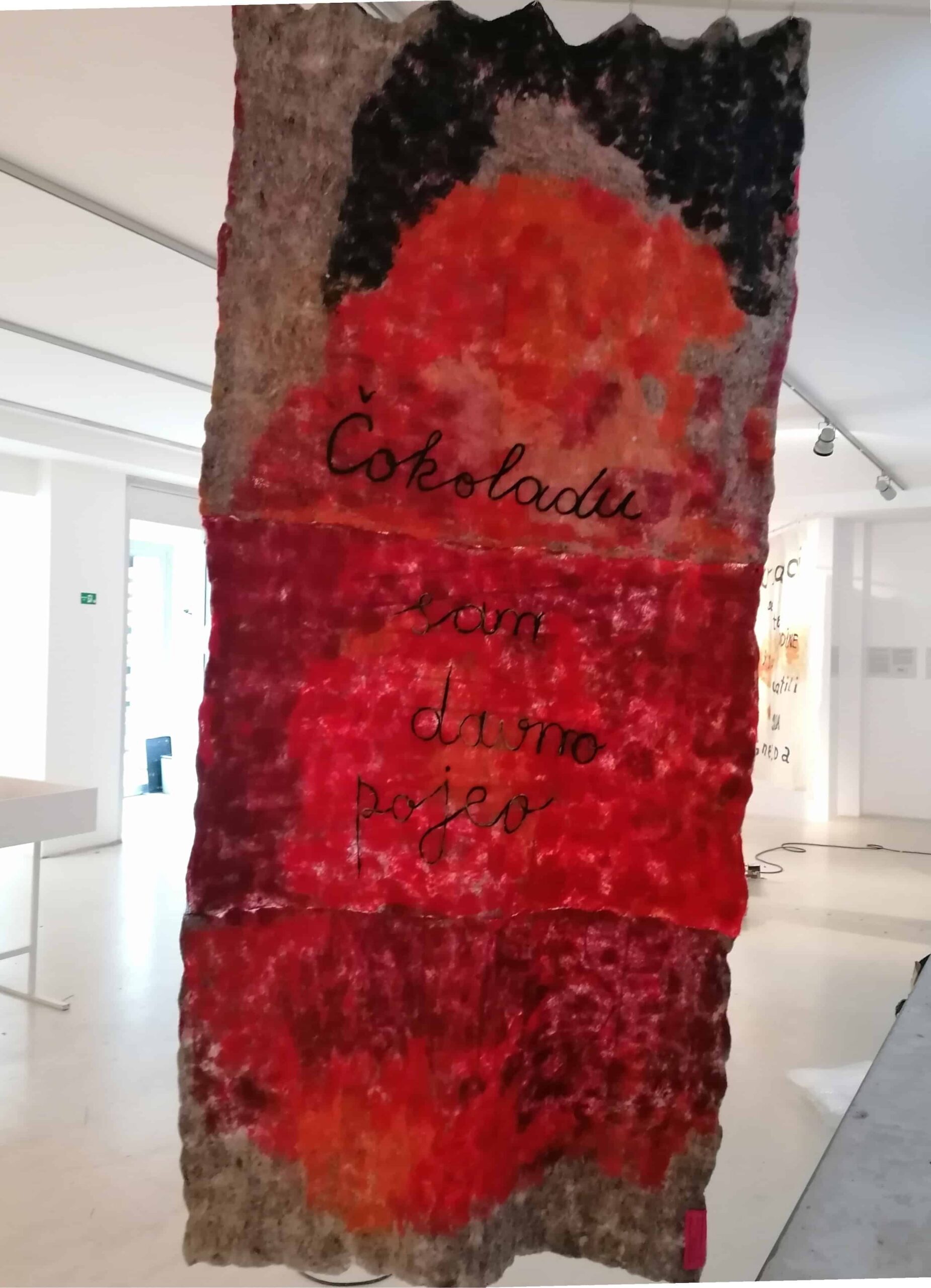
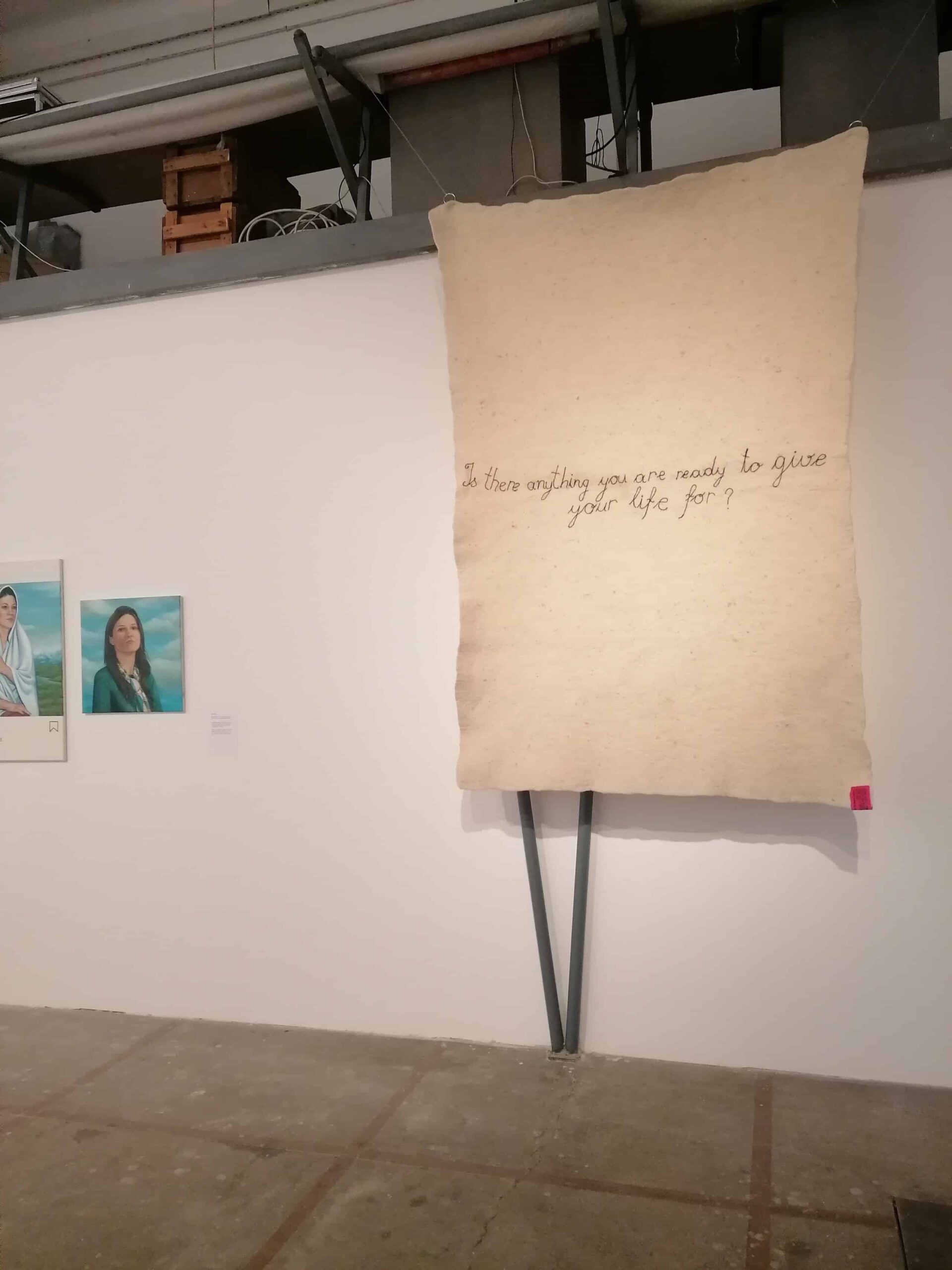
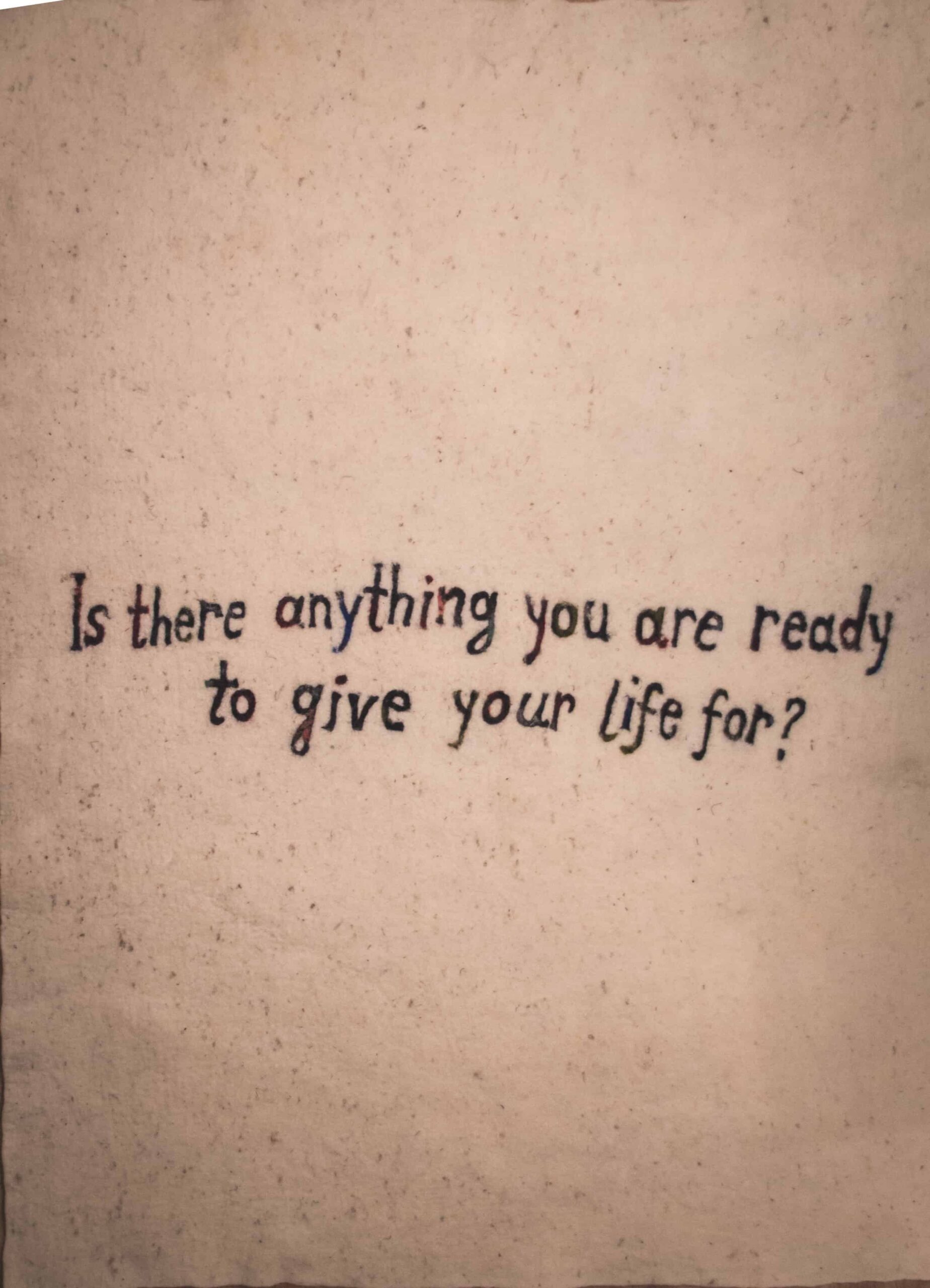
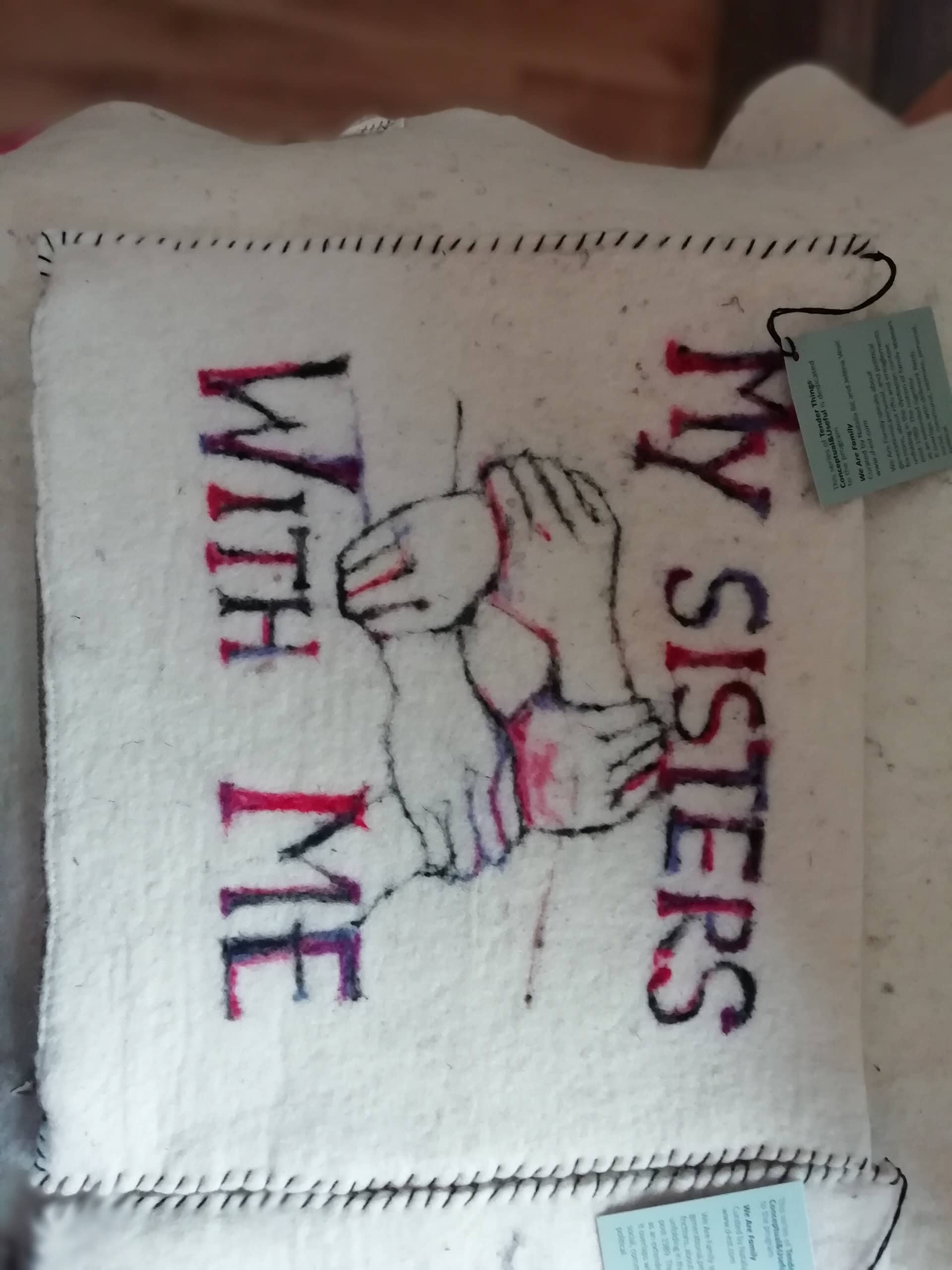
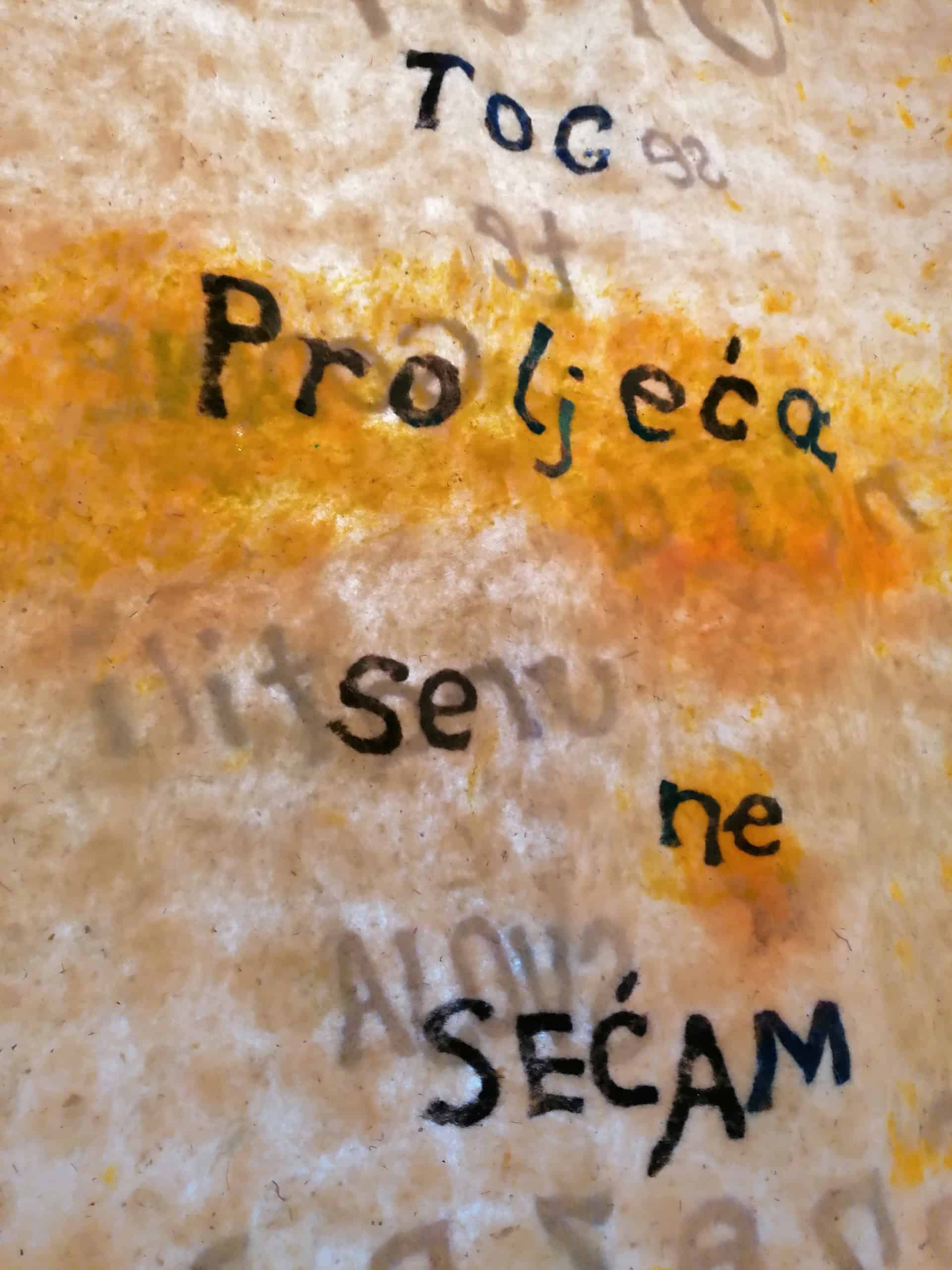
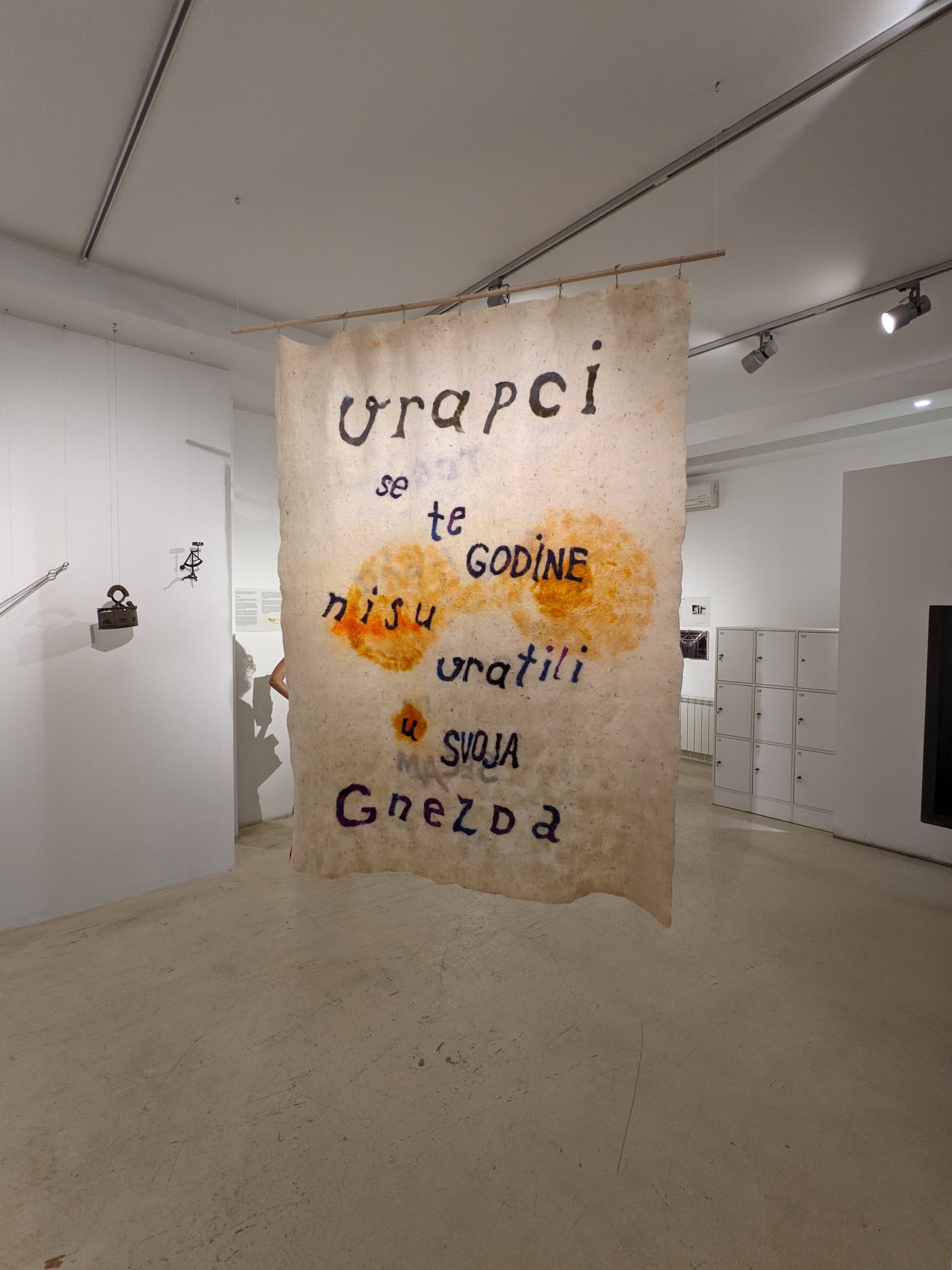
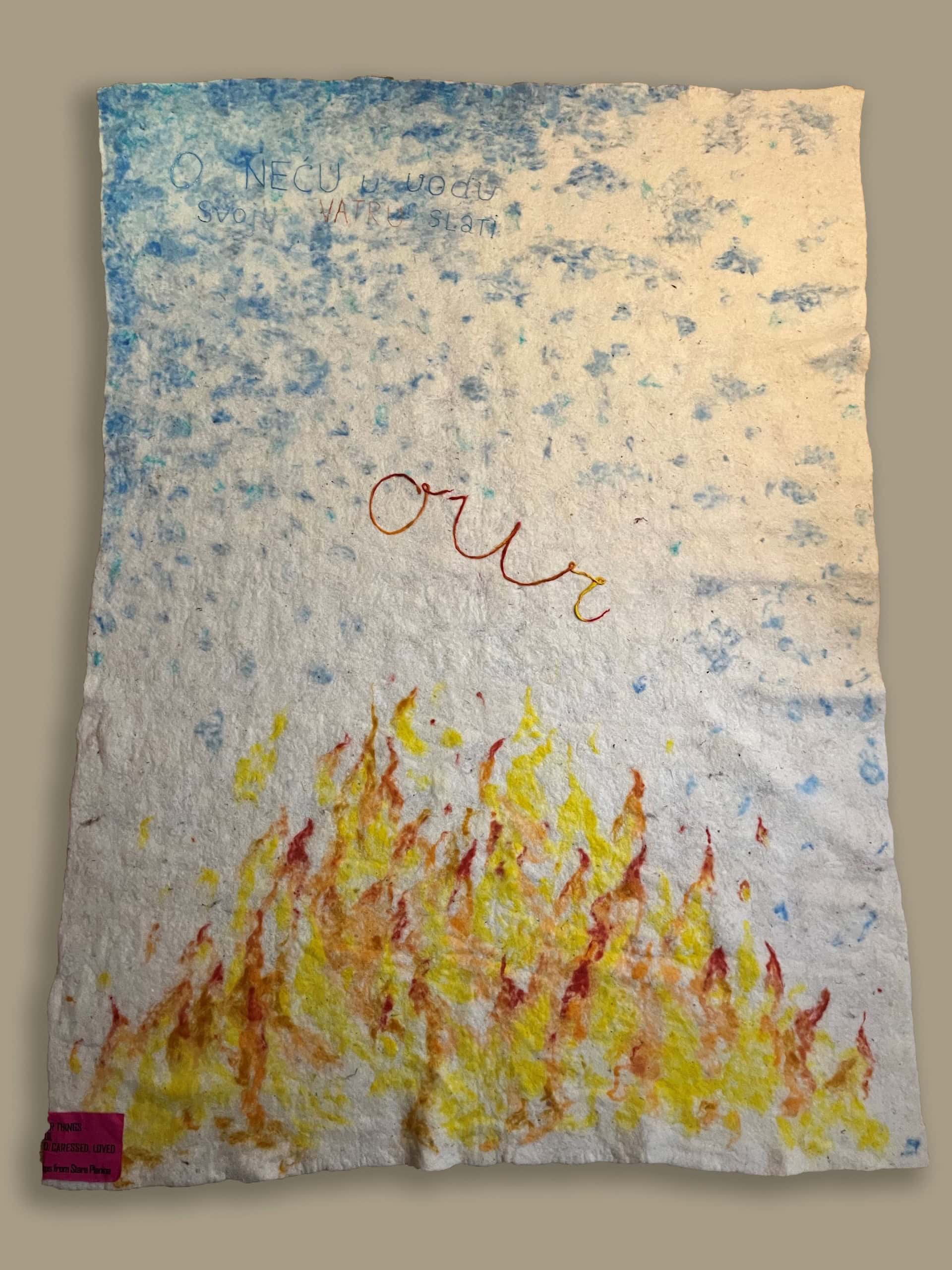
Woolen paintings, paintings-fabrics, materialized paintings, paintings-objects are autonomous objects that can be used as some kind of body support: pillow, rug, blanket, bedspread, cloak… The painting does not appear here as part of the wall but as part of the space, ambience and atmosphere that people bring with themselves; the painting is not only perceptual, but also tactile, experiential, corporal. The painting you wrap yourself with, which covers you, which you touch. Tender thing – conceptual and useful.
About the material and technique / Hands are a powerful tool
Wool is a very flexible material, characterized by strength and durability. The softness and tenderness of wool appear as the opposite of its persistence. The felting technique involves the processing of combed non-spun wool, where the woolen threads are intertwined with each other by mechanical action, creating a fabric or a solid object. Felting is a complex process, both mental and physical, which lasts several days. It requires a pre-conceived concept of message-text, an elaborate plan of constructing painting – object – usable thing, but also improvisation in the process of visual realization of the painting.
Just as a traditional canvas, the fabric is initially an “untouched whiteness”. The “canvas” is built by arranging the threads of wool, subsequently “intervened with text” and “painted” with small threads of wool. The letters and words of the text are imprinted, embedded in the surface of the painting/fabric. As the title of the series itself Tender things – conceptual & useful, hand-made, caressed, cuddled, loved suggests, objects are made by caressing, stroking, touching.
Video of exibited works: https://youtu.be/rInKMApfrQo
BIO
Vesna Vesić is a multimedia artist who lives and works in Belgrade. She graduated from the Faculty of Fine Arts in Belgrade, and is a member of ULUS (having a status of an independent artist since 2001). Vesić works with “first person narration” video, drawing in material (fabric, wool), sculpture as an intervention into space and reaction to the existing situations in the architectural/archaeological/historical context. Intertwining autobiographical, historical, intimate and wider social narratives, she experiments with textures and materials, contemplating old and new artistic languages and maintaining an engaged stance towards civilization(s) and historical consciousness, togetherness and emotional-affective bonds which shape and bound communities. She has been exhibiting independently since the mid 1990s. Her first work, dealing with reflections on the process of artistic creation and aesthetics of the gallery white space as a social space, was exhibited in the Students’ Cultural Centre Gallery in 1996. Vesna Vesić has participated in numerous exhibitions in her native Serbia and abroad (Belgrade, Vršac, Novi Sad, Pančevo, Kragujevac, Čačak, Ljubljana, Vienna, Warsaw, Poznan, Berlin, Venice, Trieste, Rome, Amsterdam, Tallinn).
Her video performance Wash Me and I’ll Be Whiter than Snow was exhibited at the 48th Venice Biennale, in the International selection curated by Harald Szeemann (dAPERTutto exhibition, 1999).
Video: https://vimeo.com/152947771